


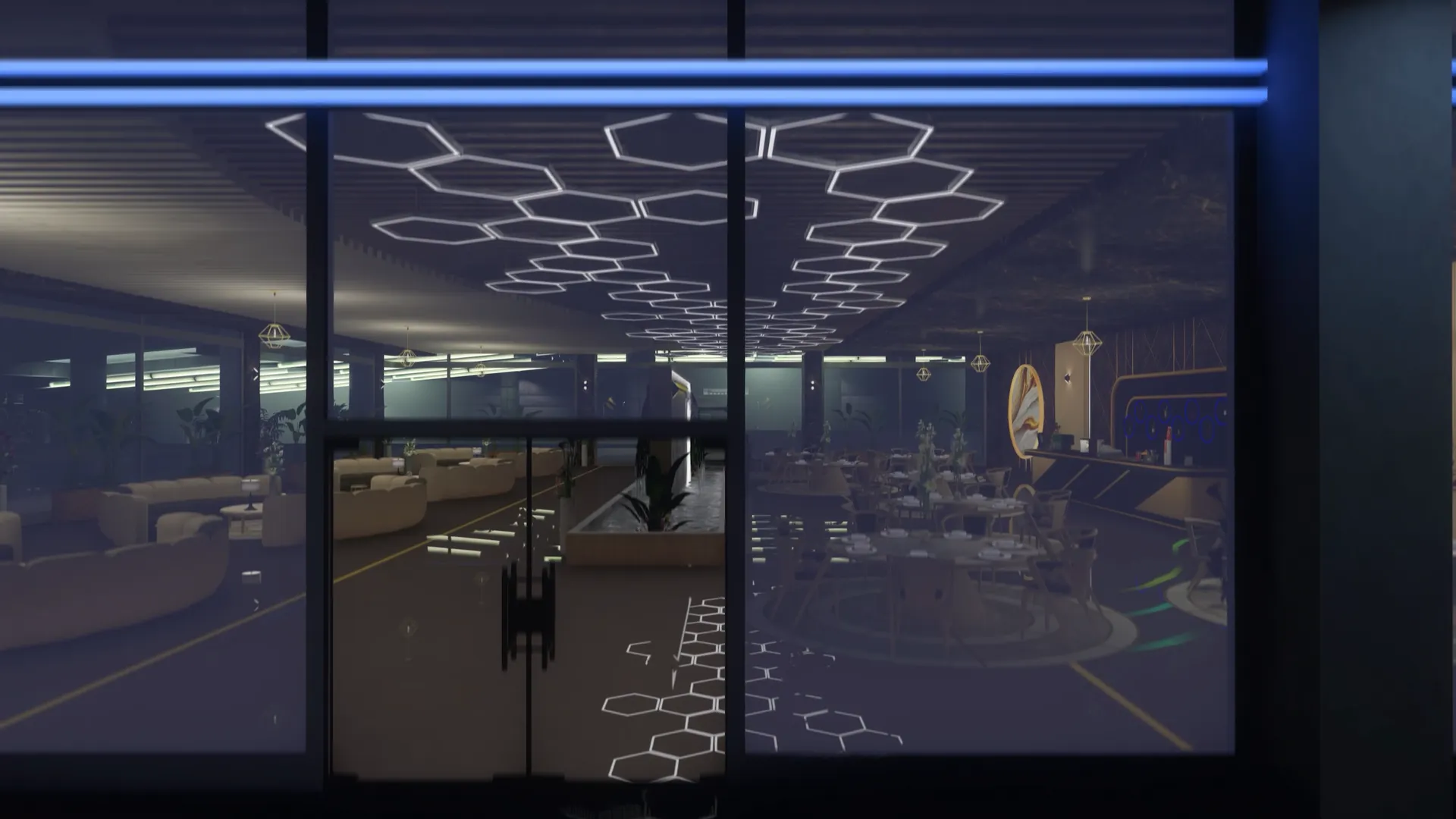

Mechanic Creator turns a patch of your map into a working workshop. A customer drives onto the bay, the curtain closes, and a mechanic walks them through performance, cosmetics, wheels, paint and repairs with the car turning on a scripted camera. Behind the counter there is a tablet: the order board, the shop funds, the staff, the dynamometer and the service history. Shops can be bought by a player, staffed by a job, run by a gang — or simply left open to everybody.
What separates it from other mechanic scripts is how little is typed. Every shop — its bay, its blip, its car lift, its stash, its wardrobe, its garage, its engine bench and the TVs the dyno plays on — is placed in game with a free camera and handles. Every behaviour is a setting changed live from an in-game panel, across thirteen sections. There is no SQL to import: the first start builds its own tables. And the interface speaks 41 languages.
Where to start#
Page | What it covers |
|---|---|
Requirements, download, load order, the database, and claiming admin access. | |
Placing a shop, the tuning window, the tablet, who owns a workshop, the driving systems and the settings panel. | |
Frameworks, inventories, billing, vehicle keys, clothing, notifications — and how each one is detected. | |
The four items, their images, and the entry to paste for each inventory. | |
Commands, the exports for driving it from your own scripts, and the Discord webhooks. | |
What each problem means and the one setting that explains most of them. |
What it does#
Area | Details |
|---|---|
Tuning | Five categories — performance, cosmetics, wheels, respray, repairs — each switchable per shop. A camera that frames the part being fitted, a free-look mode that hides the panel, a cart with a running total, and a search that reaches inside categories. |
Engine swaps | A laptop to order engines, a pallet they arrive on, and a hoist that carries one to the car. The fitted engine changes handling and sound, and it survives garages and restarts. |
The tablet | Six screens: home, dynamometer, orders, service history, management and settings. Orders can be invoiced or refunded, funds deposited and withdrawn, and staff hired with nine individual rights. |
Dynamometer | A power run on the connected car: horsepower and torque curves, top speed, power-to-weight, drivetrain. If the shop has screens placed on its walls, the run plays on the one the mechanic picks. |
Who owns a shop | Four answers, and only ever one at a time: on public sale at its map blip, handed to one player, staffed by a job, or run by a gang. Job and gang shops take their roster from the framework, with a grade that also manages the place. |
Radial menu | Full, body and engine repairs, wash, flip, refuel, towing and a flatbed — each with its own switch, its own item requirement and an optional skill check. |
Driving systems | Wheels that come off and stay off, brakes that fade when they overheat, and mud that sinks a car off-road. Three independent systems, each with its own settings section. |
The creator | Ten sections per shop placed with a freecam: tuning bays, blip, car lifts, item shops, stashes, dyno screens, garages, wardrobe and the engine bench. Plus a map view of every shop you own. |
Settings | Thirteen sections edited in game and applied without a restart: money, ownership, employees, orders, tuning, radial, items, engines, car lift and the three driving systems. |
Languages | 41 complete translations, from Arabic to Chinese. A key missing from one of them falls back to English rather than showing a blank. |
Driving it from your own scripts? A repair, a wash or a refuel can be triggered from anywhere, wheel damage can be read and written, and an engine-swap invoice can be sent from your own billing flow. See Commands and Exports.